
U-Type Terminal Blocks: PVC, PA and PP Compared | SafetyPass
U-Type Terminal Blocks: PVC, PA and PP Compared
By the Antong Engineering Team · Reviewed August 2026 · 10 min read
Selecting the right U type terminal block requires more than matching a familiar catalog name. Products in the same category can differ in current path, conductor interface, material, dimensions, mounting and approval conditions.
For distributors and appliance manufacturers, that distinction affects initial design, purchasing, assembly and later maintenance. This guide follows the original brief from construction through ratings, applications and practical checks so the same evidence can support the RFQ, sample approval and inspection record.
From more than 35 years of manufacturing terminal blocks, the consistent lesson is that reliability comes from matching the complete application rather than one attractive number. Antong catalog families include U-type products in PP, PE, PA6 and PVC, with construction and ratings varying by exact model.
Quick answer: A U-type terminal block is a fixed multi-pole screw terminal strip offered in materials such as PVC, PA and PP. Choose the housing from its declared temperature, flammability, tracking, chemical and mechanical data—not from the resin name alone—and confirm conductor material and product ratings separately.
In this guide
What Is a U-Type Terminal Block?
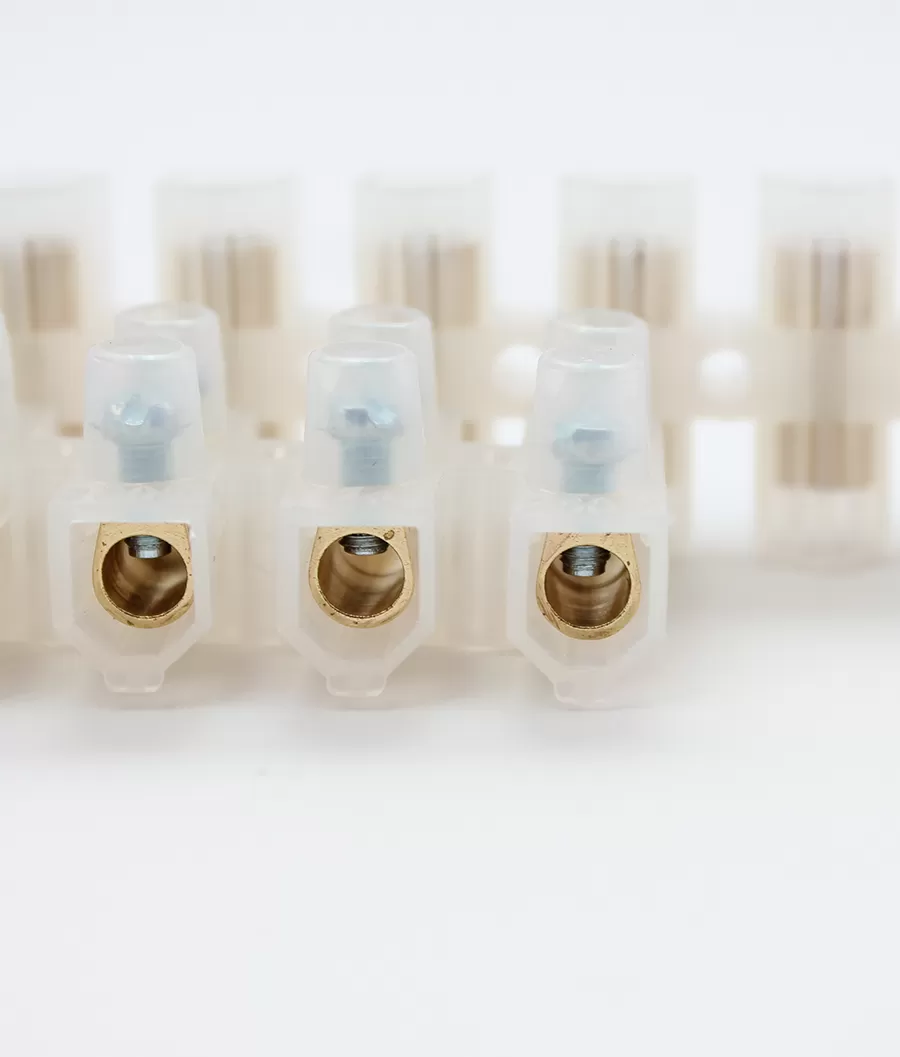
A U-type terminal block is a fixed multi-pole screw terminal strip offered in materials such as PVC, PA and PP. A useful definition also identifies the boundary of the category, separating a U-Type Terminal Block from similar-looking connection or mounting systems.
Shape and construction: U-shaped body with tubular contacts
The datasheet or drawing should identify shape and construction and state u-shaped body with tubular contacts. Follow the complete current path from wire entry through the clamp and current bar to the opposite interface. Then verify how the housing supports and separates that path. Confirm the result on a production-representative sample before releasing tooling or volume orders.
Recessed screws for safety
The mechanism must create stable contact pressure without damaging the conductor or hardware. Specify the tool, preparation method and model-specific torque or spring procedure, then inspect full insertion. Keep the evidence with the drawing and sample record so purchasing cannot substitute a similar-looking part.
Common pole counts: 4, 6, 8, 10, 12 ways
The datasheet or drawing should identify common pole counts and state 4, 6, 8, 10, 12 ways. Use the point to eliminate unsuitable variants, then confirm the remaining choice on the exact datasheet and sample. Similar naming is not evidence of equivalent construction. Resin family names do not establish a universal temperature or flammability rating; grade and completed-product testing control.
PVC Insulated U-Type Blocks
The decisions under pvc insulated u-type blocks affect first-time assembly and long-term maintenance. Document them in the bill of materials and installation instructions instead of leaving them to operator judgment.
Temperature range and cost position
Measure total installed space and labor rather than unit size or price alone. Higher density can increase heat, routing effort and service time, while a more expensive interface can reduce assembly or replacement cost. Keep the evidence with the drawing and sample record so purchasing cannot substitute a similar-looking part.
Best for: lighting, low-temperature applications, cost-sensitive
The datasheet or drawing should identify best for and state lighting, low-temperature applications, cost-sensitive. One application can contain both low-energy signals and high-power circuits. Divide the wiring into duty classes and select each terminal from the conditions at that connection point. Do not copy the value from a neighboring series unless the manufacturer documents the same construction and approval.
PA (Nylon) U-Type Blocks
The decisions under pa (nylon) u-type blocks affect first-time assembly and long-term maintenance. Document them in the bill of materials and installation instructions instead of leaving them to operator judgment.
PA6 vs PA66: temperature and mechanical properties
Compare the alternatives on the same axes: function, current path, conductor, mounting, rating, service method and approval. Judge both alternatives under the same load, conductor, mounting and service conditions. Similar appearance or one shared dimension does not establish equivalent function or approval. Antong catalog families include U-type products in PP, PE, PA6 and PVC, with construction and ratings varying by exact model.
Best for: higher temperatures, industrial environments
The datasheet or drawing should identify best for and state higher temperatures, industrial environments. State the requirement in terms that engineering, purchasing and inspection can all verify. If the catalog does not provide the needed value, request a drawing or test record before approval. Do not copy the value from a neighboring series unless the manufacturer documents the same construction and approval.
PP (Polypropylene) U-Type Blocks
The decisions under pp (polypropylene) u-type blocks affect first-time assembly and long-term maintenance. Document them in the bill of materials and installation instructions instead of leaving them to operator judgment.
Chemical resistance and lightweight
Current rating is a result of the complete conductive path and temperature-rise test. Confirm the load, conductor, enclosure temperature and number of simultaneously loaded adjacent terminals. Keep the evidence with the drawing and sample record so purchasing cannot substitute a similar-looking part.
Best for: chemical environments, general purpose
The datasheet or drawing should identify best for and state chemical environments, general purpose. State the requirement in terms that engineering, purchasing and inspection can all verify. If the catalog does not provide the needed value, request a drawing or test record before approval. Resin family names do not establish a universal temperature or flammability rating; grade and completed-product testing control.
Material Comparison Table
The comparison under material comparison table is most useful when every option is judged against the same circuit and installation conditions. Compare tested ratings, fit, labor and service requirements rather than one isolated feature.
PVC vs PA vs PP: max temp, flame rating, mechanical strength, cost (original)
Compare the alternatives on the same axes: function, current path, conductor, mounting, rating, service method and approval. Judge both alternatives under the same load, conductor, mounting and service conditions. Similar appearance or one shared dimension does not establish equivalent function or approval. Keep the evidence with the drawing and sample record so purchasing cannot substitute a similar-looking part.
U-Type Housing Material Comparison
| Material family | Typical reason to consider it | What must be verified |
|---|---|---|
| PVC | Economy and application-specific flexibility | Temperature, flame and aging limits |
| PA / nylon | Strength and higher-temperature grades | PA grade, moisture behavior and certification |
| PP | Low density and chemical resistance | Temperature, stiffness and flammability grade |
Properties vary by resin grade, colorant and completed product.
Conductor Options: Brass vs Steel
This section covers conductor options, specifically brass vs steel. Keep every value tied to the exact model and the conditions stated in its drawing or datasheet.
Brass conductor for conductivity
Use material data to screen candidates, then rely on completed-product temperature, mechanical and flammability tests. Generic labels such as nylon, brass or bakelite are not acceptance criteria by themselves. Confirm the result on a production-representative sample before releasing tooling or volume orders.
Steel conductor for cost-sensitive applications
The application is a starting condition, not a rating. Translate it into current, voltage, temperature, vibration, enclosure, servicing and certification requirements before choosing a product family. Antong catalog families include U-type products in PP, PE, PA6 and PVC, with construction and ratings varying by exact model.
Antong U-Type Product Range
Antong's feed-through terminal blocks illustrate how one named family can contain several materials, sizes and approval combinations. Use the complete item number and current drawing; do not transfer one model's rating to every variant in the range.
Available models, colors, and pole counts with photos
Use the visual system to support the schematic, terminal schedule and maintenance record. Color or position alone is insufficient where a marker can be hidden, changed or interpreted differently. Do not copy the value from a neighboring series unless the manufacturer documents the same construction and approval.
Related guidance: Terminal Block Types: The Complete Guide with Pictures and H-Type Terminal Blocks: Complete Guide to H-Series Connectors.
FAQ: Frequently Asked Questions
Which U-type terminal block is best for lighting?
There is no single best material for lighting. PVC may suit cost-sensitive, lower-temperature duty; PA may suit higher mechanical or thermal demands; PP may suit particular chemical environments. Verify the exact product rating and luminaire temperature.
What is the temperature rating of PA terminal blocks?
PA terminal blocks do not have one universal temperature rating. PA6, PA66, stabilizers, colorants, molding, flammability grade and completed-product testing all affect the declared operating range.
Are PVC terminal blocks heat resistant?
PVC offers useful insulation and economy but can soften or age outside its declared temperature range. Use it only within the exact datasheet limits and the equipment's measured thermal environment.
Next Steps: Choosing the Right Terminal Block
Turn the guide into a short specification before requesting a quotation. Record the exact function, conductor, electrical ratings, dimensions, mounting, environment, accessories and destination-market approvals, then evaluate a sample in the real assembly.
Browse relevant products — compare complete terminal blocks and connectors catalog and feed-through terminal blocks.
Request the full catalog and drawings — keep the exact item number, revision, dimensions, ratings and accessory list together.
Evaluate production-representative samples — use the actual wire, ferrule or lug, tool, mounting and enclosure conditions.
Send a complete RFQ to engineering — include current, voltage, conductor, environment, quantity, approvals and any OEM/ODM requirements.
Antong has manufactured terminal blocks since 1989, operating a 55,000 m² production facility with ISO 9001 quality management and shipping to 70+ countries. Product parameters and certifications vary by exact model; request the current datasheet and approval evidence before releasing the bill of materials.
Continue reading
H-Type Terminal Blocks: Complete Guide to H-Series Connectors
Push-In Terminal Blocks: Speed and Reliability for Panel Builders
References & standards
IEC 60947-7-1, Low-voltage switchgear and controlgear — Part 7-1: Ancillary equipment — Terminal blocks for copper conductors — webstore.iec.ch
WAGO Material Specifications, PA66, PBT and PC insulation-material properties — www.wago.com
Antong product documentation, Terminal blocks, brass bars, factory and quality information — www.safetypass.com
Antong Alibaba Store, Catalog and sample-order channel — safetypass.en.alibaba.com
UL 94, Tests for flammability of plastic materials — www.ul.com
Phoenix Contact Material Tests, Glow-wire, ball-pressure and flammability tests for terminal materials — www.phoenixcontact.com
Technical content prepared by the Antong Engineering Team from 35+ years of terminal block manufacturing experience. Values, compatibility and approvals must always be confirmed against the exact product datasheet and applicable installation standard before design release.