
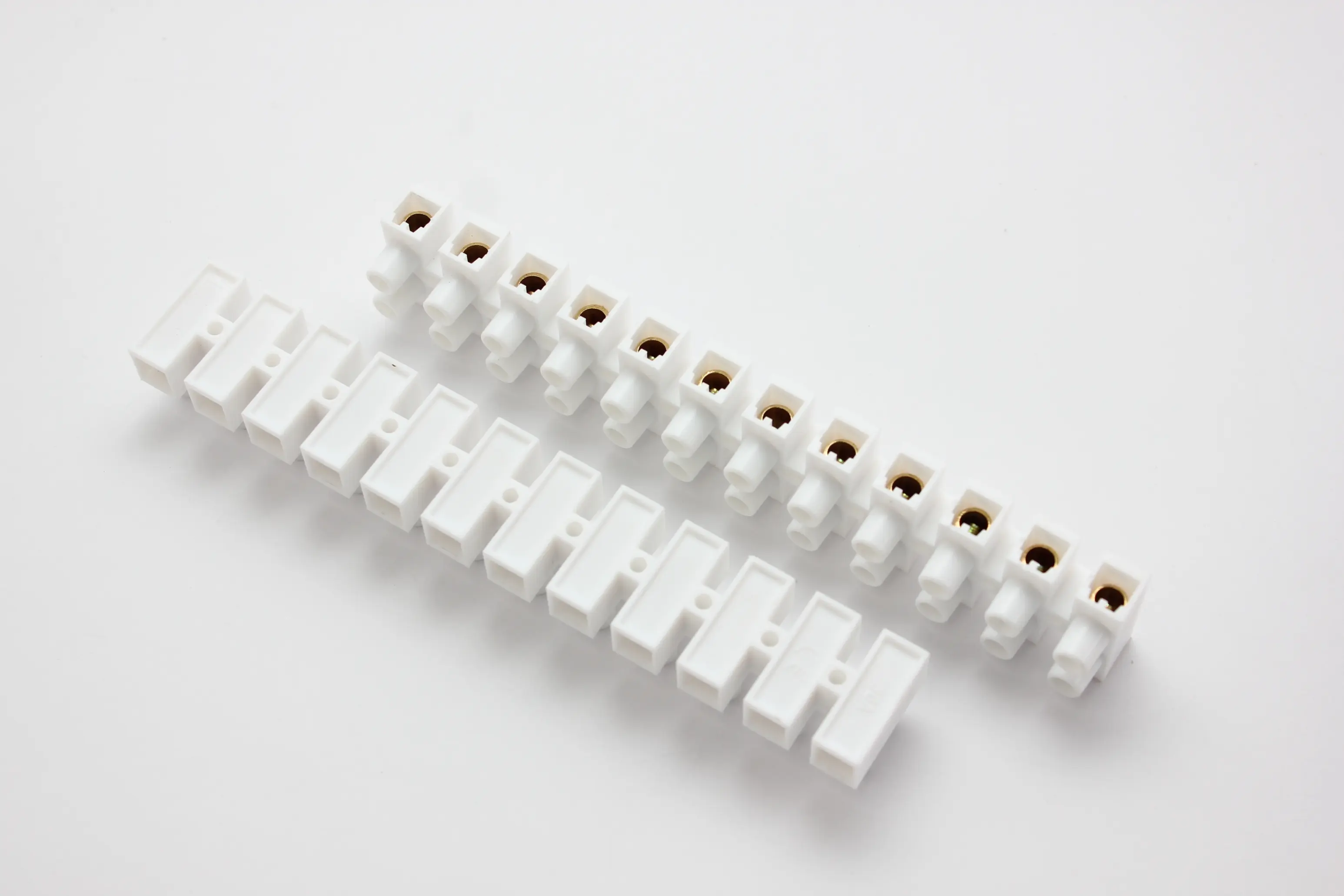
H-Type Terminal Blocks: Guide to H-Series Connectors | SafetyPass
H-Type Terminal Blocks: Complete Guide to H-Series Connectors
By the Antong Engineering Team · Reviewed August 2026 · 9 min read
Selecting the right H type terminal block requires more than matching a familiar catalog name. Products in the same category can differ in current path, conductor interface, material, dimensions, mounting and approval conditions.
For appliance OEMs and distributors, that distinction affects initial design, purchasing, assembly and later maintenance. This guide follows the original brief from construction through ratings, applications and practical checks so the same evidence can support the RFQ, sample approval and inspection record.
From more than 35 years of manufacturing terminal blocks, the consistent lesson is that reliability comes from matching the complete application rather than one attractive number. H-type naming describes a supplier product family rather than an IEC shape classification.
Quick answer: An H-type terminal block is a fixed multi-way screw terminal strip whose H-style body and mounting geometry are supplier-specific. Compare PE, PP and PA versions by the exact datasheet, then verify pole count, wire range, current, voltage, screw torque, mounting dimensions and required market approvals.
In this guide
What Is an H-Type Terminal Block?
An H-type terminal block is a fixed multi-way screw terminal strip whose H-style body and mounting geometry are supplier-specific. A useful definition also identifies the boundary of the category, separating an H-Type Terminal Block from similar-looking connection or mounting systems.
H-shaped body design and mounting features
Compare the full rail profile or hole pattern, not one nominal dimension. Include installed height, end restraint, neighboring devices and the clearance needed to operate the clamp. Do not copy the value from a neighboring series unless the manufacturer documents the same construction and approval.
Screw mounting on panels
Connection reliability comes from controlled contact force and a clean interface. Match the wire preparation and operating method to the exact clamp rather than tightening or pushing by feel. Keep the evidence with the drawing and sample record so purchasing cannot substitute a similar-looking part.
Material Options: PE, PP, PA
This section covers material options, specifically pe, pp, pa. Keep every value tied to the exact model and the conditions stated in its drawing or datasheet.
PE (polyethylene): flexibility and low cost
The datasheet or drawing should identify pe (polyethylene) and state flexibility and low cost. Use material data to screen candidates, then rely on completed-product temperature, mechanical and flammability tests. Generic labels such as nylon, brass or bakelite are not acceptance criteria by themselves. Antong catalog H-type families include PE, PP and PA6 versions, with VDE or NF status applying only to identified variants.
PP (polypropylene): chemical resistance
The datasheet or drawing should identify pp (polypropylene) and state chemical resistance. Keep continuous and abnormal current separate. The selected rating needs margin for the real duty cycle, but it must still come from the exact IEC or UL product row. Do not copy the value from a neighboring series unless the manufacturer documents the same construction and approval.
PA (nylon): temperature and strength
The datasheet or drawing should identify pa (nylon) and state temperature and strength. Use material data to screen candidates, then rely on completed-product temperature, mechanical and flammability tests. Generic labels such as nylon, brass or bakelite are not acceptance criteria by themselves. Do not copy the value from a neighboring series unless the manufacturer documents the same construction and approval.
Practical Selection Summary
| Decision area | What to verify | Why it matters |
|---|---|---|
| What Is an H-Type Terminal Block? | H-shaped body design and mounting features; Screw mounting on panels | Defines the product function |
| Material Options: PE, PP, PA | PE (polyethylene): flexibility and low cost; PP (polypropylene): chemical resistance | Controls fit and installation |
| VDE-Certified H-Type Blocks | What VDE certification means for European buyers; Compliance with German and European safety standards | Affects rating and service life |
| H-Type vs U-Type: How to Choose | Shape, mounting, and application differences; When to specify H over U | Prevents purchasing substitutions |
| Antong H-Type Range | 12-way models, materials, colors, certifications | Supports inspection and maintenance |
Use this table as an RFQ checklist; the exact datasheet remains controlling.
VDE-Certified H-Type Blocks
Evaluating vde-certified h-type blocks requires both product data and installed conditions. Keep each catalog value paired with the exact model, conductor, mounting and approval to which it applies.
What VDE certification means for European buyers
Approval applies to the exact catalog number and stated conditions, not to visual family resemblance. Record the standard, certificate or file reference, conductor range and required accessories in the design evidence. H-type naming describes a supplier product family rather than an IEC shape classification.
Compliance with German and European safety standards
Approval applies to the exact catalog number and stated conditions, not to visual family resemblance. Record the standard, certificate or file reference, conductor range and required accessories in the design evidence. Do not copy the value from a neighboring series unless the manufacturer documents the same construction and approval.
H-Type vs U-Type: How to Choose
This section covers h-type vs u-type, specifically how to choose. Keep every value tied to the exact model and the conditions stated in its drawing or datasheet.
Shape, mounting, and application differences
The application is a starting condition, not a rating. Translate it into current, voltage, temperature, vibration, enclosure, servicing and certification requirements before choosing a product family. Record the accepted condition in the terminal schedule so installers and inspectors use the same basis.
When to specify H over U
Make the choice only after the operating conditions and service objective are quantified. Judge both alternatives under the same load, conductor, mounting and service conditions. Similar appearance or one shared dimension does not establish equivalent function or approval. Antong catalog H-type families include PE, PP and PA6 versions, with VDE or NF status applying only to identified variants.
Antong H-Type Range
Antong's feed-through terminal blocks illustrate how one named family can contain several materials, sizes and approval combinations. Use the complete item number and current drawing; do not transfer one model's rating to every variant in the range.
12-way models, materials, colors, certifications
Use material data to screen candidates, then rely on completed-product temperature, mechanical and flammability tests. Generic labels such as nylon, brass or bakelite are not acceptance criteria by themselves. Record the accepted condition in the terminal schedule so installers and inspectors use the same basis.
Related guidance: Terminal Block Types: The Complete Guide with Pictures and Feed-Through Terminal Blocks: A Complete Overview.
FAQ: Frequently Asked Questions
What is the difference between H-type and U-type terminal blocks?
H-type and U-type are supplier-family shape descriptions, not universal IEC classes. Compare mounting holes, body profile, wire entry, conductor construction, dimensions and ratings on the two exact drawings.
Are VDE terminal blocks required in Germany?
Not automatically. German equipment may require particular product approvals through a customer specification or end-product standard, but the required marks depend on the application and conformity route. Verify the exact model's VDE certificate scope.
What is PE material in terminal blocks?
PE can mean polyethylene when it identifies a housing resin; in electrical drawings, PE also means protective earth. Use the surrounding datasheet heading to avoid confusing the material with the circuit function.
Next Steps: Choosing the Right Terminal Block
Turn the guide into a short specification before requesting a quotation. Record the exact function, conductor, electrical ratings, dimensions, mounting, environment, accessories and destination-market approvals, then evaluate a sample in the real assembly.
Browse relevant products — compare complete terminal blocks and connectors catalog and feed-through terminal blocks.
Request the full catalog and drawings — keep the exact item number, revision, dimensions, ratings and accessory list together.
Evaluate production-representative samples — use the actual wire, ferrule or lug, tool, mounting and enclosure conditions.
Send a complete RFQ to engineering — include current, voltage, conductor, environment, quantity, approvals and any OEM/ODM requirements.
Antong has manufactured terminal blocks since 1989, operating a 55,000 m² production facility with ISO 9001 quality management and shipping to 70+ countries. Product parameters and certifications vary by exact model; request the current datasheet and approval evidence before releasing the bill of materials.
Continue reading
References & standards
VDE Testing and Certification, Product testing and certification for electrical components — www.vde.com
Antong product documentation, Terminal blocks, brass bars, factory and quality information — www.safetypass.com
Antong Alibaba Store, Catalog and sample-order channel — safetypass.en.alibaba.com
IEC 60947-7-1, Low-voltage switchgear and controlgear — Part 7-1: Ancillary equipment — Terminal blocks for copper conductors — webstore.iec.ch
Technical content prepared by the Antong Engineering Team from 35+ years of terminal block manufacturing experience. Values, compatibility and approvals must always be confirmed against the exact product datasheet and applicable installation standard before design release.